
Memento … Lembra-te…
Dinis Ribeiro
2023 — Barcelos
Este “Memento … Lembra-te …” é resultado duma visão criativa e regeneradora do papel do artista plástico enquanto mobilizador de imagens sobre a realidade que pretendemos reconhecer, repensar e reinventar.
This “Memento… Remember…” is the result of a creative and regenerative vision of the role of the visual artist as a mobilizer of images about the reality that we intend to recognize, rethink and reinvent.
DESCRIÇÃO DO PROJETO
A presente mostra escultórica reafirma o projeto artístico de Dinis Ribeiro de desocultação da realidade pela arte, onde a expressão plástica modelada na pedra, na madeira, no ferro e no barro revela as texturas e as formas de um olhar crítico sobre a humanidade. Há uma intencionalidade de construir uma visão antropológica com preocupações reflexivas sobre o comportamento humano, onde as temáticas abordadas espelham as cores da mundividência duma existencialidade que tende a subverter o equilíbrio de um ethos fundadordos costumes e das linhas normativas que enformam as sociedades nacionais de pertença. A impermanência caracteriza o deambular do humano na contemporaneidade, por isso, o artista, enquanto arauto dos ecos sólidos da ancestralidade, invoca uma estética ao serviço da imaginação que suscita o dever de uma ética de responsabilidade pelo legado histórico que nos constitui. Este “Memento … Lembra-te …” é resultado duma visão criativa e regeneradora do papel do artista plástico enquanto mobilizador de imagens sobre a realidade que pretendemos reconhecer, repensar e reinventar. O entendimento necessita da imaginação que a arte galvaniza em renova das significações. E, a linguagem artística que nos recria e nos amplia o modo de ver — e mesmo de sentir — não é um espaço hermético, mas espaço aberto à compreensão de cada tempo. Daí, na linha de Jorge Oteiza, Dinis Ribeiro procura nas suas esculturas espacializar o tempo. Ora, espacializaro tempo é dar-lhe sentido, é moldá-lo em imagens interpretativas que nos tornam mais claro a duração do caminho percorrido no passado, que é corrente líquida para um presente contínuo de novas representações. A escultura tem a missão de regenerar o espaço e o tempo. Neste sentido, a arte apresenta-se como uma conceção salvadora do próprio Homem, pois “a arte consiste, em toda a época e em qualquer lugar, num processo integrador, ‘religador’, do homem com a sua realidade, que parte sempre de um nada que é nada e termina em outro Nada que é Tudo, um Absoluto, como resposta limite e solução espiritual da existência”. Assim, diz-nos Vergílio Ferreira, “a Arte é a forma radical de reconhecermos o que somos, de evidenciarmos para nós a pessoa que somos, a absoluta radicalidade de nós”. Desta forma, “Memento… Lembra-te…”, enquanto espaço de recolhimento de ação e conhecimento, nos remeter ao apelo, ao conselho permanente da memória atenta do Homem, pronunciada pelo Padre António Vieira no final do Sermão de Quarta-Feira de Cinza (1672): “Quanto tenho vivido? Comovivi? Quanto posso viver? Como é bem que viva? Memento homo”.
“Quanto tenho vivido?”
As sonoridades dos sinos da Basílica de São Torcato, no concelho de Guimarães, marcaram o ritmo da formação do escultor Dinis Ribeiro na Escola de Cantaria de São Torcatoque prosseguiu a tradição histórica dos grandes construtoresde catedrais. A influência da sensibilidade da arte espiritualdesses mestres edificadores de templos marca a estética de Dinis Ribeiro, que não esquece o papel do significado e osentido da vida no tempo do Homem. As esculturas patentes na Sala Gótica dos Paços do Concelho de Barcelos, bem como no exterior do edifício, revelam bem essa influência e traduzem a razão duma preocupação pela brevidade da vida humanaque exige uma ética de inquietação nos modos de sere estar na existência doada. Estas esculturas antropomórficas que se reduzem à simplicidade, dobradas ou recolhidas sobre si próprias, não são alheias ao espetador que as admira, mas talvez suscitem reflexão num silêncio de luz inspiradora.
“Como vivi?”
Se esta pergunta do Padre António Vieira traduz umapreocupação pela forma virtuosa das ações ao longoda vida, na linha escultórica de Dinis Ribeiro ela repre-senta um chamamento à memória do legado do pa-trimónio cultural comum, seiva da identidade nacionalque se pretende preservar e recordar. As esculturas de “Memento”, presentes em locais emblemáticos da história de Barcelos, procuram, assim, objetivar a afirmação de aprendizagens interculturais de valorização do património cultural histórico e artístico, material e imaterial.
“Quanto posso viver?”
Se o Padre António Vieira nos confronta com a natureza transitória da vida humana e o sublinhado nos valores essenciais da espiritualidade, Dinis Ribeiro, no mesmo propósito, esculpe a perenidade do tran-sitório, recorrendo a linhas de expressão plástica quenos fazem contemplar a condição humana, que nosremetem para a existência — esse espaço entre a vidae a morte. Partindo da metáfora da filósofa Hannah Arendt de “pensar sem corrimão”, Dinis Ribeiro, consciente da inconstância do mundo atual que perdeu o corrimão para estabilizar o de ambular no quotidiano, esculpe as emoções, as aspirações e os conflitos do Homem como possibilidade de nos reconciliar com a esperança que se perde e ganha em cada sopro de vida.
“Como é bem que viva?”
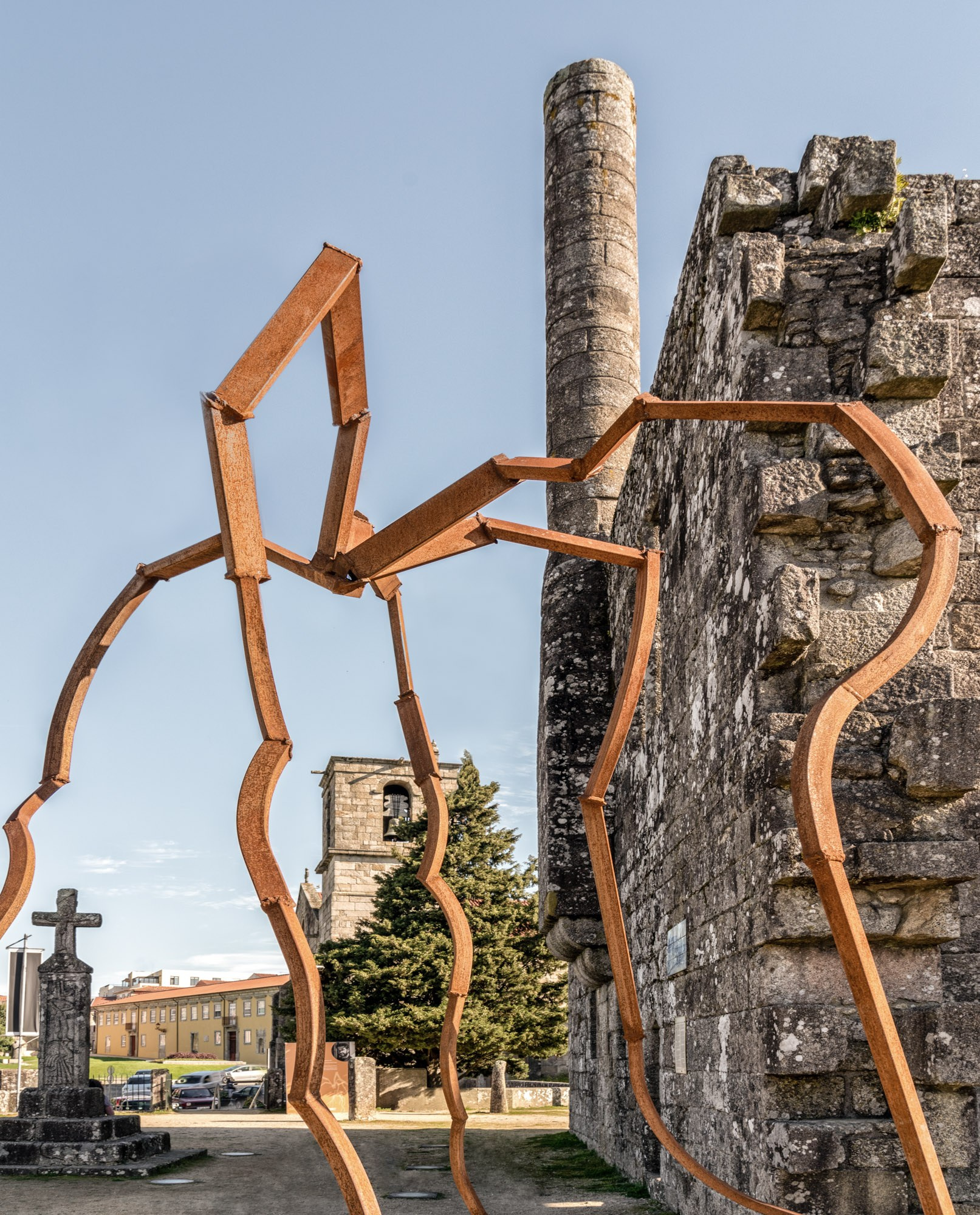
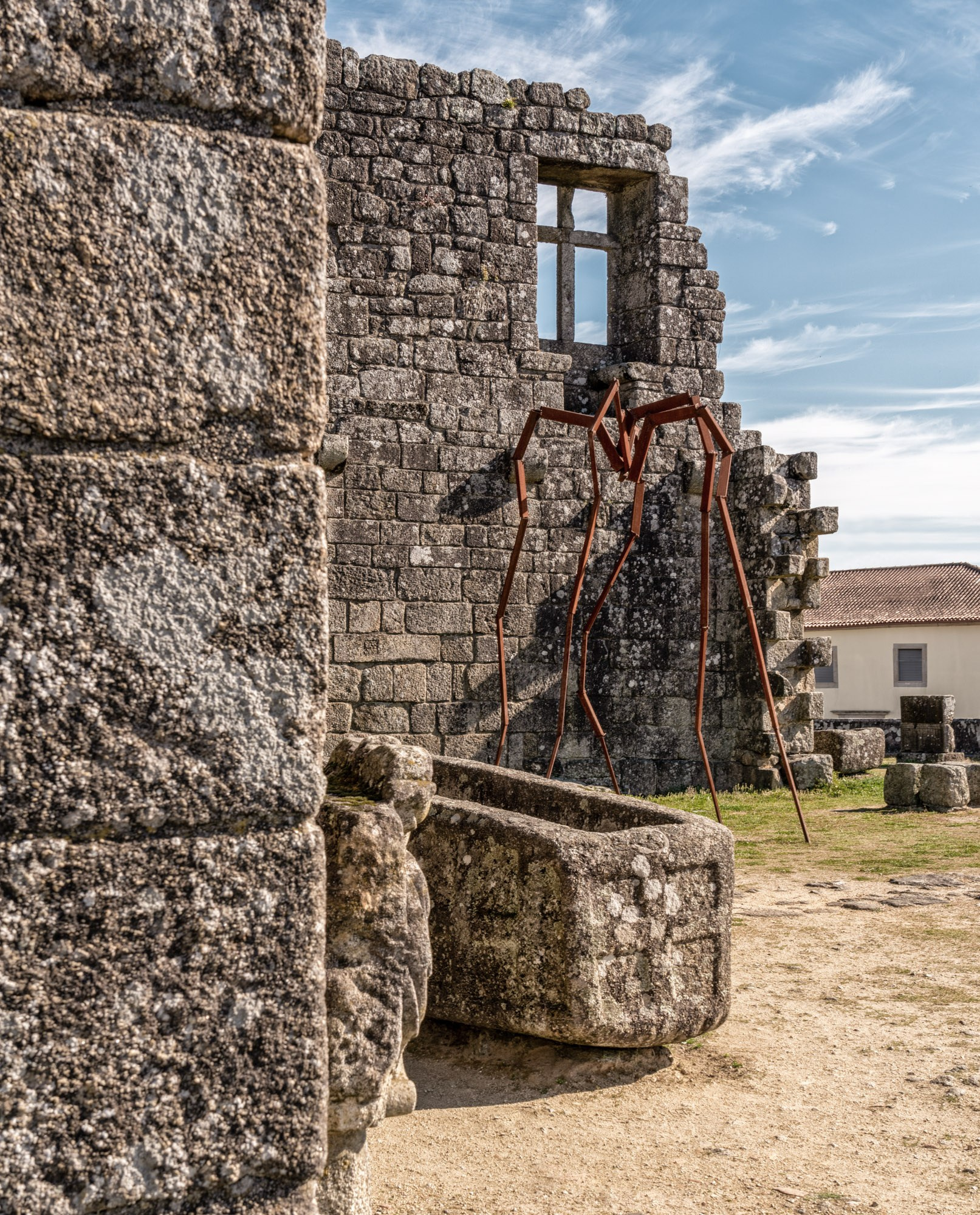
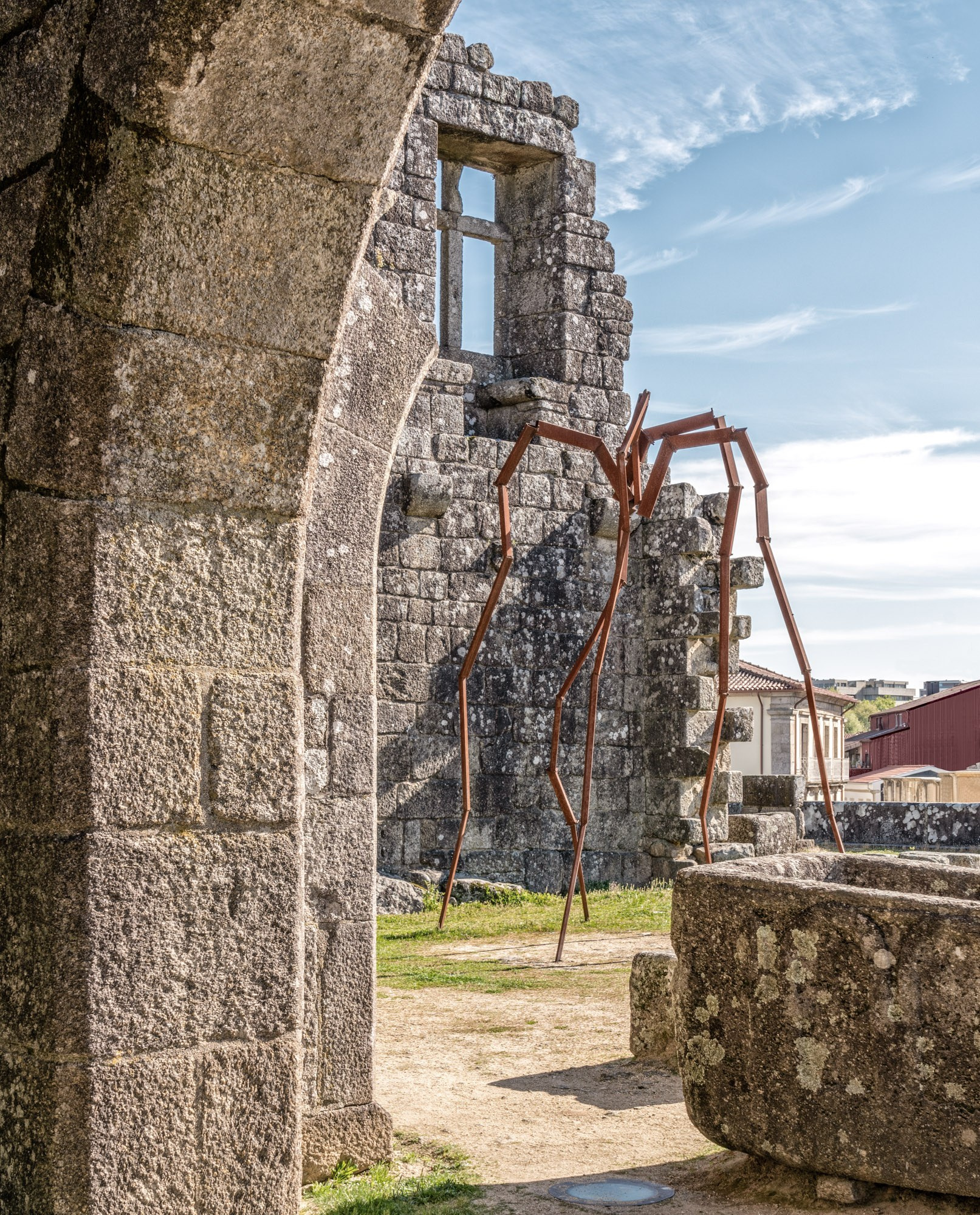
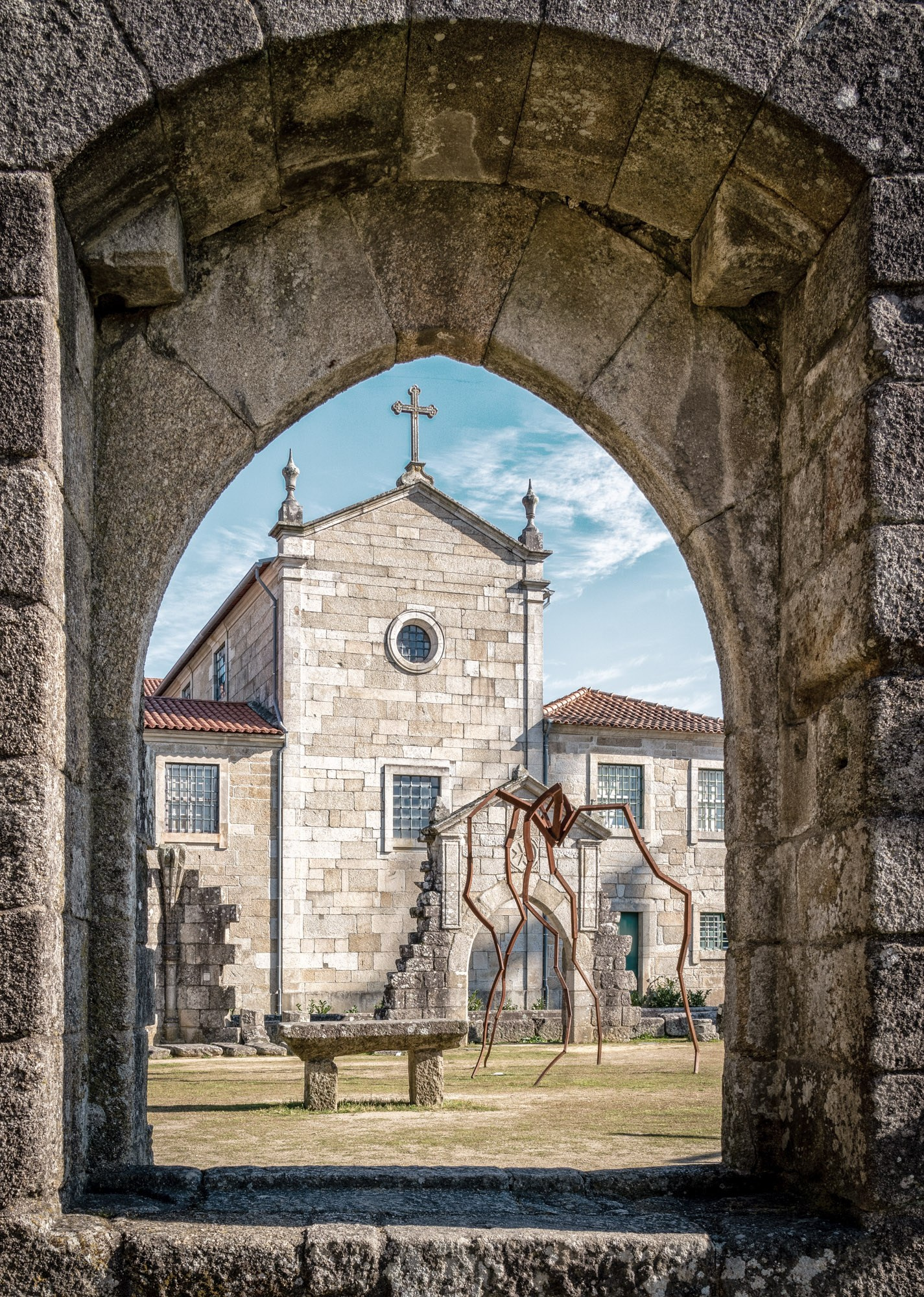
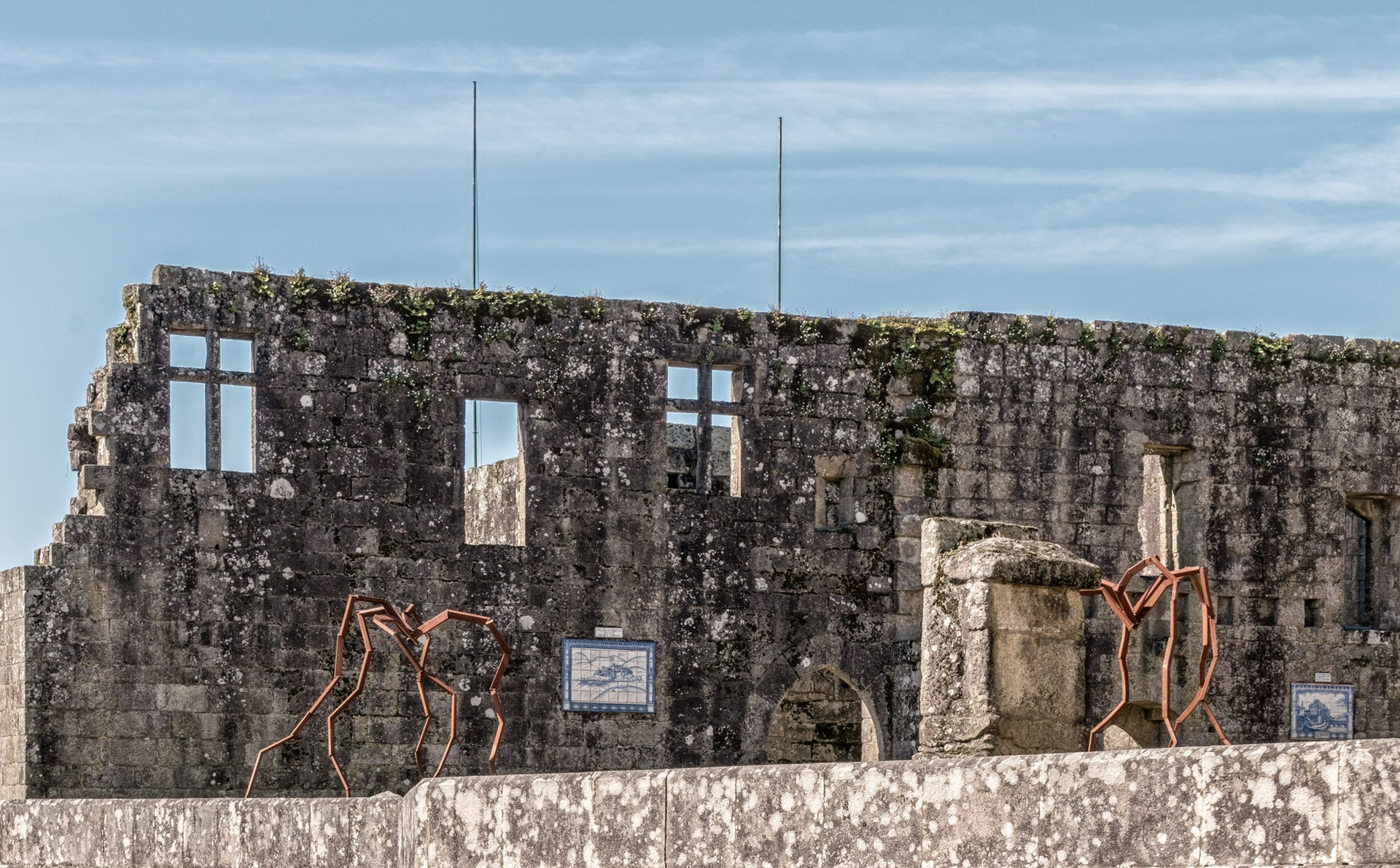
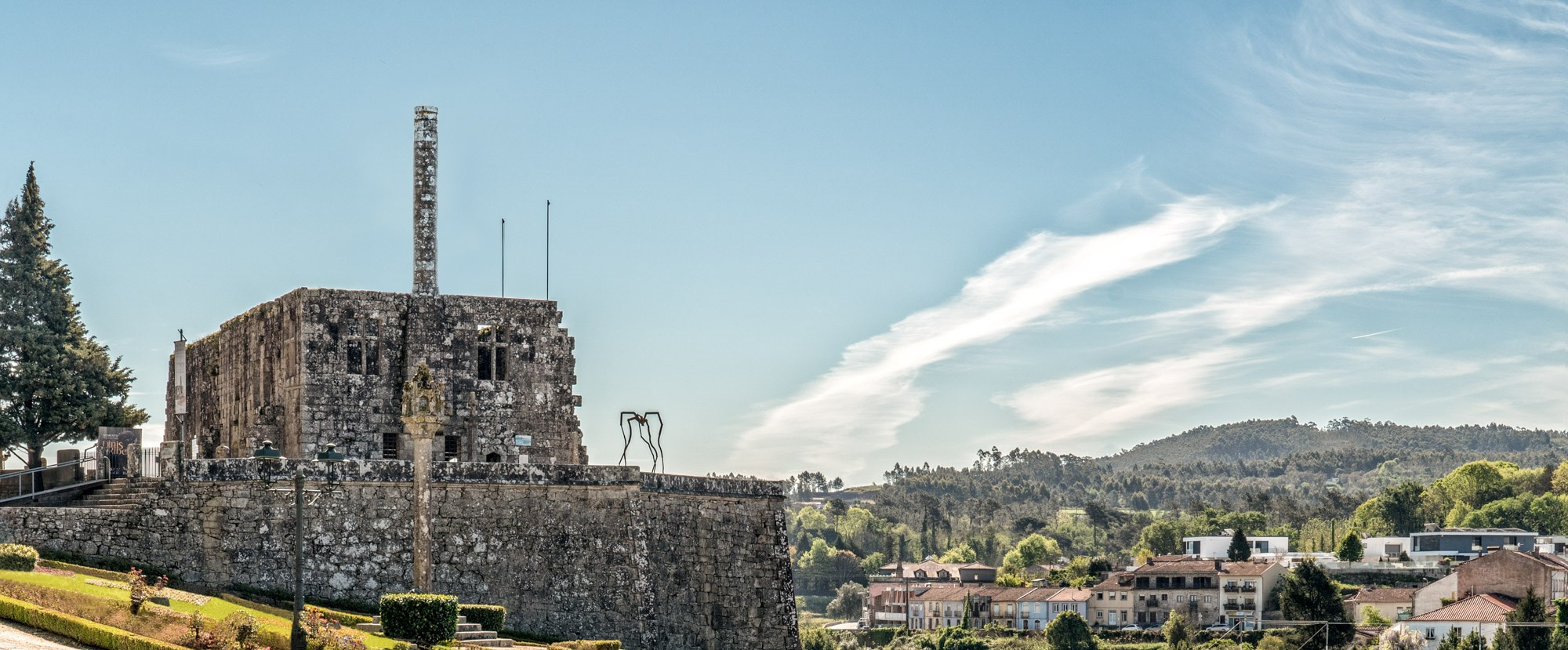
Ao desafio de Vieira de nos interrogar sobre uma prática devida boa e virtuosa, Dinis Ribeiro, no núcleo escultórico do Paço dos Condes, apresentanos as esculturas “Ensemble” que, paralelamente, são um desafio por ações de desenvolvimento sustentável em prol de uma consciência ecológica sobre o uso dos escassos recursos do planeta.“Ensemble”, representado por aranhas em ferro, simboliza ateia que o homem tece com as suas despreocupações ou preocupações com o meio ambiente, ou seja, teia enquanto túmulo ou morada desejada.
“Memento homo”
Do “memento homo” do Padre António Vieira, vincou-se a ideia do “memento” enquanto evocação de algo que esteve patente como fundamental e deixou de estar. Importa a preservação de lembranças ideais, com a criação de imagens artísticas marcantes que suscitem a imaginação capaz de salvaguarda da identidade coletiva que nos caracteriza. Urge colocar ordem nas ideologias do esquecimento do Ser, nos desmandos da linguagem que subverte a raiz etimológicadas palavras, na virtual inteligência artificial que nos desumaniza, etc. Em “Memento … Lembra-te …” de Dinis Ribeiro, em suma, mora (aqui) uma pedagogia artística em ancipatóriapela ética do viver.
Delfim Sousa
Curador
PROJECT DISCRIPTION
This sculptural exhibition reaffirms Dinis Ribeiro’s artistic project of unveiling reality through art, where the plastic expression modeled in stone, wood, iron, and clay reveals the textures and forms of a critical gaze upon humanity. There is an intention to construct an anthropological vision with reflective concerns about human behavior, where the themes addressed mirror the colors of a worldview of an existentiality that tends to subvert the balance of a founding ethos of customs and normative lines that shape national societies of belonging. Impermanence characterizes the wandering of humanity in contemporary times; therefore, the artist, as a herald of the solid echoes of ancestry, invokes an aesthetic at the service of the imagination that evokes the duty of an ethic of responsibility for the historical legacy that constitutes us. This “Memento… Remember…” is the result of a creative and regenerative vision of the role of the visual artist as a mobilizer of images about the reality that we intend to recognize, rethink, and reinvent. Understanding requires the imagination that art galvanizes in the renewal of meanings. And the artistic language that recreates and expands our way of seeing—and even feeling—is not a hermetic space, but a space open to the understanding of each time. Thus, following in the footsteps of Jorge Oteiza, Dinis Ribeiro seeks to spatialize time in his sculptures. Now, to spatialize time is to give it meaning, to mold it into interpretative images that make clearer the duration of the path traveled in the past, which is a fluid current for a continuous present of new representations. Sculpture has the mission of regenerating space and time. In this sense, art presents itself as a saving conception of Man himself, because “art consists, in every era and in every place, in an integrating, 'reconnecting' process of man with his reality, which always starts from a nothing that is nothing and ends in another Nothing that is Everything, an Absolute, as a limit answer and spiritual solution of existence”. Thus, as Vergílio Ferreira tells us, “Art is the radical way of recognizing what we are, of revealing to ourselves the person we are, the absolute radicality of ourselves.” In this way, “Memento… Remember…”, as a space for reflection on action and knowledge, refers us to the appeal, to the permanent advice of the attentive memory of Man, pronounced by Father António Vieira at the end of the Ash Wednesday Sermon (1672): “How much have I lived? How have I lived? How much can I live? How well should I live? Memento homo”.
“How much have I lived?”
The sounds of the bells of the Basilica of São Torcato, in the municipality of Guimarães, marked the rhythm of the sculptor Dinis Ribeiro’s training at the São Torcato Stonemasonry School, which continued the historical tradition of the great cathedral builders. The influence of the sensitivity of the spiritual art of these master builders of temples marks the aesthetics of Dinis Ribeiro, who does not forget the role of meaning and the sense of life in the time of Man. The sculptures displayed in the Gothic Hall of the Barcelos Town Hall, as well as on the exterior of the building, clearly reveal this influence and reflect a concern for the brevity of human life, which demands an ethic of unease in the ways of being and existing in the gifted existence. These anthropomorphic sculptures, reduced to simplicity, folded or withdrawn upon themselves, are not alien to the viewer who admires them, but perhaps provoke reflection in a silence of inspiring light.
“How did I live?”
If this question from Father António Vieira reflects a concern for the virtuous nature of actions throughout life, in Dinis Ribeiro’s sculptural work it represents a call to remember the legacy of common cultural heritage, the lifeblood of national identity that one intends to preserve and remember. The “Memento” sculptures, present in emblematic locations in the history of Barcelos, thus seek to objectify the affirmation of intercultural learning in the appreciation of historical and artistic cultural heritage, both tangible and intangible.
“How long can I live?” I
If Father António Vieira confronts us with the transitory nature of human life and underlines it in the essential values of spirituality, Dinis Ribeiro, with the same purpose, sculpts the permanence of the transitory, resorting to lines of plastic expression that make us contemplate the human condition, that refer us to existence — that space between life and death. Starting from the philosopher Hannah Arendt’s metaphor of “thinking without a handrail, ” Dinis Ribeiro, aware of the inconstancy of the current world that has lost the handrail to stabilize the one of wandering in daily life, sculpts the emotions, aspirations, and conflicts of Man as a possibility of reconciling ourselves with the hope that is lost and gained in each breath of life.
“How well do you live?”
To Vieira’s challenge of questioning us about a good and virtuous way of life, Dinis Ribeiro, in the sculptural core of the Paço dos Condes, presents us with the sculptures “Ensemble” which, in parallel, are a challenge for actions of sustainable development in favor of an ecological awareness about the use of the planet’s scarce resources. “Ensemble”, represented by iron spiders, symbolizes the web that man weaves with his carelessness or concerns about the environment, that is, a web as a tomb or desired dwelling.
“Memento homo”
From Father António Vieira’s “memento homo, ” the idea of “memento” as an evocation of something that was once fundamental and is no longer so is emphasized. The preservation of ideal memories is important, with the creation of striking artistic images that stimulate the imagination capable of safeguarding the collective identity that characterizes us. It is urgent to bring order to the ideologies of forgetting Being, to the excesses of language that subvert the etymological root of words, to the virtual artificial intelligence that dehumanizes us, etc. In Dinis Ribeiro’s “Memento… Remember…”, in short, resides (here) an artistic pedagogy in emancipation through the ethics of living.
Delfim Souza
Curator